Unlocking the Hidden Value of IPv4
IPv4 is the Internet’s most important service enabler. A device or cloud server cannot be online without an IPv4 address. Yet IPv4 is priced as if it were negligible. At roughly $0.30 per month per IP, it enables services worth around $300 per month per server—about 0.1% of the value it makes possible. In any other market, critical enablers capture a meaningful share of the revenue they enable: city-center rent is often ~30% of a shop’s revenue because location is the enabler. By that logic, IPv4’s upper valuation potential is vastly higher than today’s.
Even in its suppressed state, IPv4 already represents a large share of the market capitalization of many telecoms. In some cases, the implied value of IPv4 holdings approaches or rivals the company’s entire market cap. A modest appreciation would materially re-rate infrastructure businesses. The problem is not economics; it is governance.
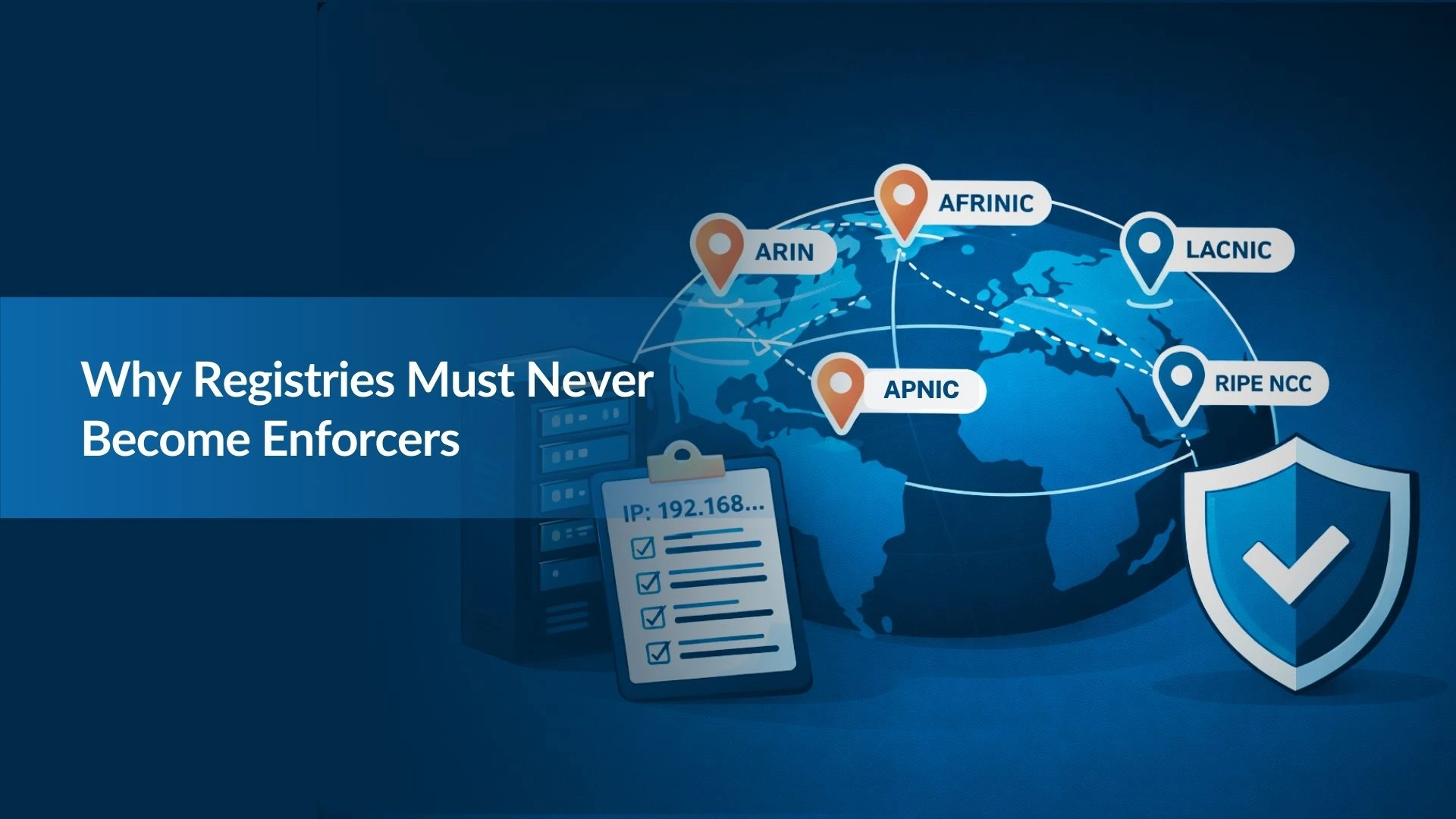
IPv4 is undervalued because the market is structurally prevented from functioning like a real market. RIR policies do three things that crush liquidity and price discovery: they refuse to recognize true ownership, they impose holding periods that prevent free resale, and they enforce “needs tests” where a bureaucracy decides whether a buyer is “eligible” even after capital is committed. These constraints turn a scarce, valuable asset into a semi-permissioned lease controlled by five small private entities—entities that, under current rules, can alter registrations in ways that could cripple major networks or even national connectivity. That is both a security risk and a valuation suppressor.
Why do these policies persist? Because most real decision-makers—CEOs, boards, shareholders—are absent from RIR governance. Participation is often delegated to technical staff who are not incentivized to optimize corporate valuation or asset rights. As a result, policy is shaped by a small “club” dynamic rather than by the owners of the assets and businesses affected.
The mechanism to fix this already exists: RIRs are membership-based. The owners of IPv4—ISPs, cloud providers, telecoms—are the electorate. The solution is to bring actual corporate leadership into the policy arena: remove artificial transfer restrictions, end needs tests, recognize ownership, and treat IPv4 as a normal tradable asset with real liquidity. Once liquidity is freed, scarcity can express itself properly, and the infrastructure sector can capture a far larger share of the value it already enables.
This is the core point: suppressing IPv4 valuation is collectively suppressing the valuation of the entire ISP and cloud industry. The industry can either accept that suppression—or reclaim control of the rules that created it.