CEO of LARUS Limited and founder of the LARUS Foundation. He works at the intersection of Internet infrastructure, IP address markets, and global Internet governance, drawing on direct involvement across all five Regional Internet Registries. These notes aim to clarify how number resources are governed in practice and advance a more accountable, resilient framework for critical IP assets.
The revival of ICP-2, a document drafted over 20 years ago to define the criteria for establishing Regional Internet Registries, was triggered by the AFRINIC governance crisis—and rightly so.
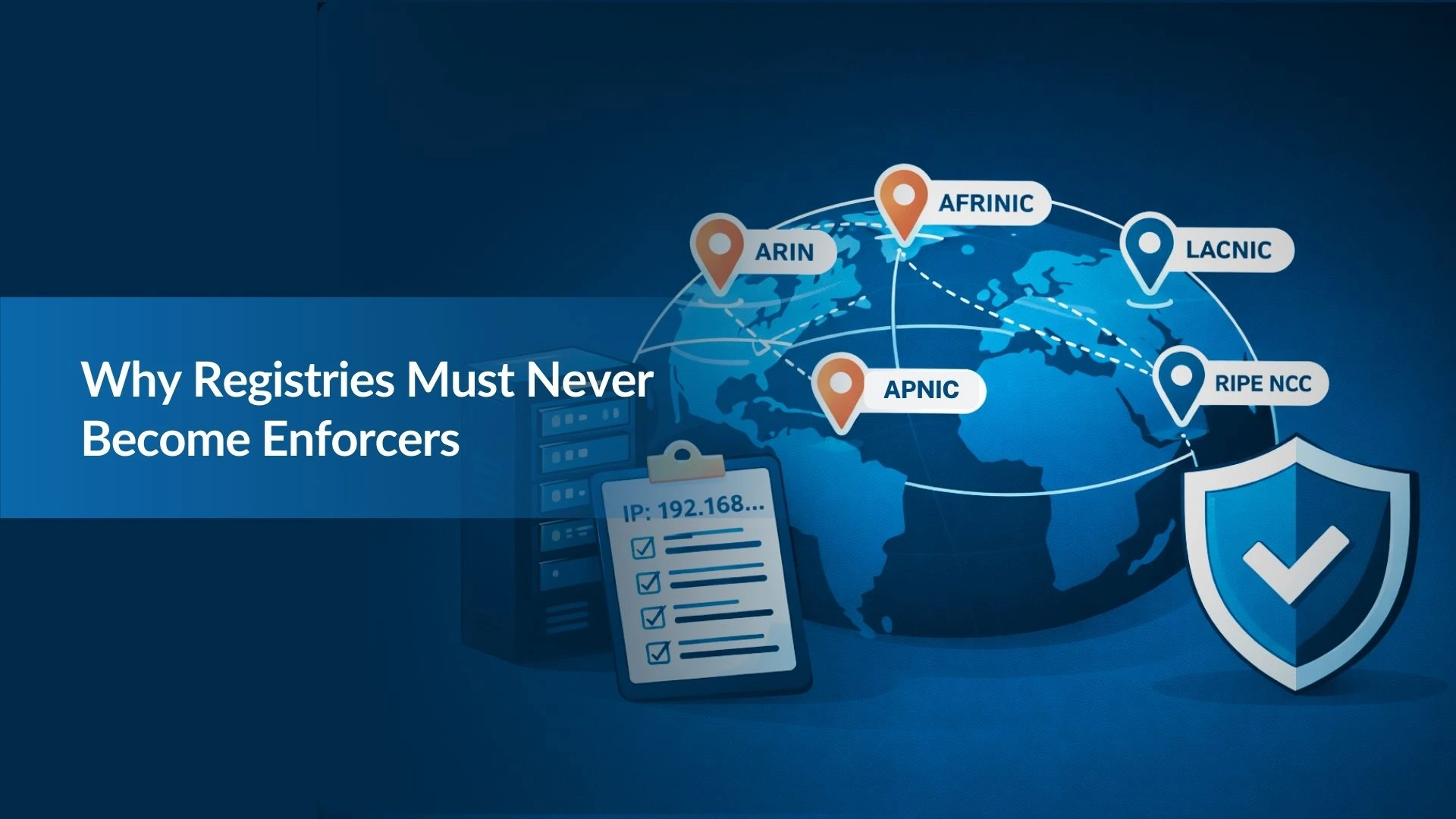
RIRs today operate with extraordinary autonomy: they answer to no sovereign authority, lack clear failover mechanisms, and in some cases have no meaningful data escrow or contingency plan. Establishing a failure standard is necessary.
What is not acceptable is using that process to further centralize power. Any mechanism to de-accredit or re-accredit an RIR must be driven exclusively by its members, not by the NRO or ICANN.
The RIR system exists only by voluntary consensus; there is no law or enforcement behind it. A top-down solution would fail immediately, because members can simply withdraw recognition.
If ICP-2 is revised, it must reinforce—not weaken—the bottom-up model, with explicit requirements that any decisive action requires overwhelming member agreement.
Accountability must come from decentralization, not hierarchy. Even where process flaws exist, I strongly encourage all members to participate in the current NRO questionnaire: if the community does not speak, others will decide for it.